
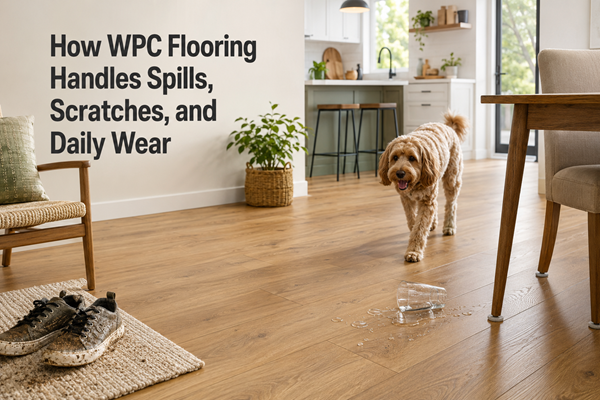
A glass of juice tips over during breakfast. Your dog runs through the room with wet paws. Later, someone drags a dining chair across the floor. These are ordinary moments, but they can be surprisingly hard on flooring.That is why WPC vinyl plank flooring attracts attention from people planning a home renovation. Its layered construction provides moisture resistance, comfort, and everyday durability. Still, no flooring material is completely damage-proof. Its performance depends on product quality, installation, maintenance, and how the room is used.
So, what happens when WPC faces spills, pet claws, moving furniture, and constant foot traffic? This guide explains its real-life performance. You will also learn how to prevent common damage and choose a product suited to your household.
How Waterproof WPC Planks Handle Everyday Spills
WPC stands for wood-plastic composite or wood-polymer composite, depending on the manufacturer. Its rigid core does not absorb water like traditional hardwood. As a result, waterproof WPC planks generally handle spilled drinks, wet shoes, and pet accidents well when cleaned promptly.However, waterproof planks do not automatically create a waterproof room. Liquid may still travel through joints, around wall edges, or beneath transition strips. If water becomes trapped under the flooring, it may affect the underlayment or subfloor. Mold, odors, and movement between the planks can follow.
A small spill usually is not a crisis. Wipe it up with a clean, absorbent cloth. Next, use a slightly damp cloth to remove any sticky residue. Large leaks, overflowing appliances, and standing water require faster action because moisture may reach areas the protective surface cannot cover.
Spills That Deserve Immediate Attention
Pet urine, cooking oil, sauces, and colored drinks should not sit for long periods. Although they may not damage the core, they can leave odors or residue. Oil also creates a slippery surface and may take extra cleaning to remove.Water near dishwashers, refrigerators, exterior doors, or plumbing fixtures deserves special attention. These areas can hide moisture beneath cabinets or trim. If a leak continues unnoticed, waterproof flooring alone cannot protect the structure below it.
Scratches, Scuffs, and Dents Are Not the Same Problem
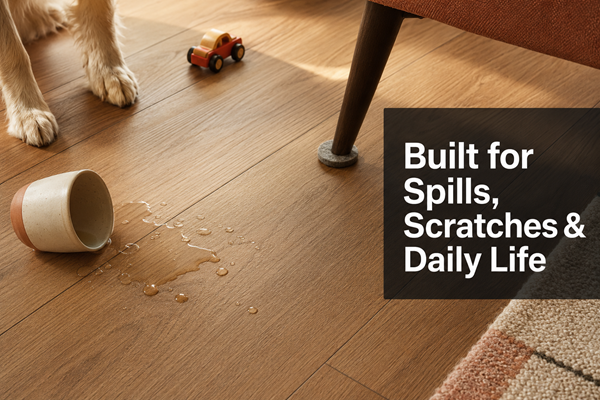
People often call every visible mark a scratch. In reality, a scuff, scratch, and dent affect the floor differently. A scuff usually rests on the protective finish and may come off during cleaning. A scratch cuts into the wear layer. A dent changes the plank’s shape under pressure.The wear layer protects the printed design beneath it. A stronger wear layer usually handles routine traffic better, but thickness is not the only factor. The quality of the finish also matters. Two products with similar specifications may perform differently because their coatings and manufacturing standards are not identical.
Pet claws normally cause fewer problems when they are kept trimmed. However, a large dog running over a dusty floor may create marks because grit acts like sandpaper. Chair legs, dropped tools, and sharp furniture edges can also damage the WPC plank surface. Even durable flooring has limits when heavy pressure is concentrated in one small spot.
Why Daily Wear Changes From Room to Room
A quiet bedroom and a busy entrance place very different demands on the same material. Bedroom floors mostly deal with light foot traffic and furniture weight. Entryways face wet shoes, gravel, sand, and repeated movement throughout the day.Kitchens introduce other risks. Food spills, cooking grease, dropped utensils, and moving chairs all affect the surface. Living rooms may experience less moisture, but heavy sofas and direct sunlight create separate concerns. A rug or piece of furniture that stays in one place can also lead to uneven color changes over time.
Here is a quick look at the most common risks:
| Room or Area | Main Risk | Helpful Protection |
| Kitchen | Spills and dropped objects | Prompt cleaning and cushioned mats |
| Entryway | Grit, mud, and moisture | Quality entrance mats |
| Living room | Furniture pressure and sunlight | Wide furniture pads and window coverings |
| Bedroom | Long-term furniture dents | Protective cups beneath heavy legs |
| Pet area | Claw marks and accidents | Nail care and quick cleanup |
For a lively household, WPC flooring for busy rooms can provide a practical balance of comfort and resilience. Yet the correct product should still be matched to the traffic level of each space.
Simple Care That Protects WPC Vinyl Flooring
Daily care does not need to become a complicated routine. The main goal is to remove loose dirt before people grind it against the floor. Sweep with a soft broom or use a vacuum made for hard surfaces. If the vacuum has a rotating beater bar, turn it off when possible.
Clean WPC vinyl flooring with a lightly damp mop and a manufacturer-approved product. Too much cleaner can leave a cloudy film that attracts more dirt. Abrasive powders, rough scrubbers, wax, and strong solvents may dull or damage the finish. Product instructions should always take priority over general cleaning advice.
A few preventive habits can save considerable frustration:
- Place mats at exterior doors to trap grit and moisture.
- Add felt pads beneath chairs, tables, and movable furniture.
- Use wide protective cups beneath heavy furniture legs.
- Trim pet nails regularly.
- Lift furniture instead of dragging it.
- Place a protective board down before moving appliances.
- Clean spills before they spread toward walls or transitions.
Check furniture pads every few months. Dirt can become trapped underneath them, while worn pads may expose a hard plastic or metal edge. Replacing a small pad costs far less than repairing a visible scratch.
Mistakes That Make WPC Flooring Wear Out Faster
Damage often begins with an ordinary habit. A chair is dragged back each evening. A wet mat remains beside the door. A steam mop is used because it seems more powerful. None of these actions appears serious at first, but repeated exposure can gradually affect the floor.Steam cleaning is a common concern. High heat and moisture may weaken adhesives, affect joints, or conflict with warranty conditions. Do not assume that a waterproof label means steam cleaning is allowed. Check the product’s care guide before using heated equipment.
Installation mistakes can be equally costly. Missing expansion gaps may cause planks to lift or separate as indoor conditions change. Poor subfloor preparation can create movement and stress at the joints. Buying the thinnest wear layer for a heavily used commercial-style space may also lead to early surface wear. Product selection and installation must work together.
How to Choose WPC Planks for Your Household
Start with your household rather than a color sample. Do you have large pets? Are children likely to spill drinks? Does the room connect directly to an outdoor entrance? A calm guest room does not need the same protection as a kitchen used throughout the day.Compare the wear layer, overall plank construction, finish, locking system, and warranty. Read what the warranty excludes as carefully as what it covers. Some warranties may exclude damage from rolling loads, improper cleaners, flooding, excessive sunlight, or poor installation.
Reliable flooring suppliers should be able to explain these differences clearly. Ask local flooring specialists how a product performs in the room you are planning. Bring details about pets, traffic, moisture, and furniture rather than asking only for the most durable option.At Sam’s Flooring, shoppers can compare WPC choices based on appearance and practical household needs. Before buying, use this short checklist:
The Honest Verdict on Long-Term WPC Performance
WPC performs well against ordinary spills because its core resists water absorption. Its wear layer also protects against light scuffs and routine foot traffic. The material feels warmer and slightly more forgiving underfoot than some harder rigid-core options.Still, a durable WPC floor is not immune to sharp objects, heavy impacts, trapped moisture, or furniture dents. Its long-term appearance depends on the quality of the product and the care it receives. A protective finish can resist wear, but it cannot cancel years of grit, dragging, and unsuitable cleaning.
The practical answer is simple: choose WPC for its balanced performance, not because you expect it to be indestructible. Match the specifications to the room, install it correctly, and follow the care instructions. With those pieces in place, the floor should handle the normal mess and movement of daily life without demanding constant attention.
FAQs
Can standing water damage WPC flooring?
The WPC core generally resists water, but standing liquid can enter through seams and perimeter gaps. It may then affect the underlayment or subfloor. Remove pooled water quickly and investigate any ongoing leak.
Will dog nails scratch WPC planks?
Trimmed dog nails usually cause little trouble during normal movement. However, sharp claws combined with sand or grit can mark the finish. Regular sweeping and nail care reduce that risk.
Can heavy furniture leave dents?
Yes. Narrow furniture legs concentrate weight in small areas and may leave pressure marks. Use wide furniture cups or floor protectors to distribute the load more evenly.
Is WPC suitable for kitchens and entryways?
It can work well in both areas because it resists everyday moisture. Entrance mats, prompt spill cleanup, and careful product selection are still necessary due to grit and frequent traffic.
How long can WPC flooring maintain its appearance?
There is no single lifespan for every product. Wear-layer quality, traffic, cleaning habits, sunlight, installation, and furniture protection all influence how long it continues to look attractive.