
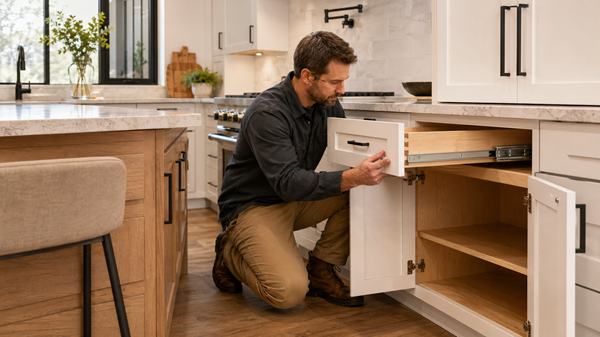
A new kitchen can look flawless on installation day. The doors line up, the finish shines, and every drawer closes neatly. Then daily life begins. A few months later, one door starts sagging. A loaded drawer becomes difficult to open. The cabinet near the sink begins swelling around the edge.These problems rarely come from the color or door style. They usually point to weak materials, basic hardware, or poor construction. That is why kitchen cabinet design should involve more than choosing something attractive. It should also consider how the cabinets will perform after years of cooking, cleaning, and constant use.
Cabinets usually take up a meaningful part of a remodeling budget. They also control much of the kitchen’s storage and workflow. Understanding cabinet quality can help Milwaukee homeowners avoid repairs, frustration, and another renovation sooner than expected.
Beautiful Cabinets Can Still Hide Costly Problems
Cabinets are easy to judge by appearance. A smooth painted door or realistic wood finish can make an affordable cabinet look impressive. However, the visible door represents only one part of the product. The cabinet box, joints, shelves, hinges, and drawer glides carry most of the daily pressure.Imagine placing several heavy pans inside a wide drawer. A weak drawer bottom may begin to bend. Low-grade glides can become noisy or difficult to move. Likewise, a thin shelf might sag after holding dishes for a year. None of these weaknesses may be obvious from a small door sample.
Small defects also create ongoing expenses. Replacing one hinge is manageable, but repeated repairs across an entire kitchen are different. Peeling finishes, loose boxes, and damaged drawer systems can become costly. Choosing durable kitchen cabinetry from the beginning usually provides greater value than repeatedly correcting avoidable problems.
How Quality Strengthens Your Kitchen Cabinet Design
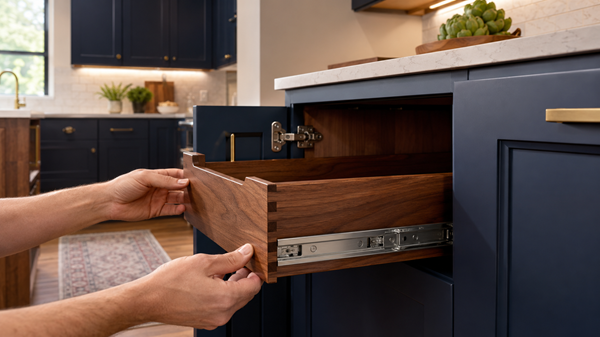
Cabinet quality begins behind the door. Strong construction keeps the layout level, supports countertops, and allows moving parts to operate properly. Even an excellent installer cannot make an unstable cabinet box perform like a well-built one.
A strong box creates a reliable foundation
The box forms the body of each cabinet. Its side panels, back, base, and joints must work together. Strong boxes remain square under weight and stay securely attached to the wall. They also provide steady support for stone countertops, sinks, and frequently used drawers.
Look at how the pieces are joined. Secure joints, reinforced corners, and a properly attached back panel are positive signs. If the box flexes easily when handled, it may struggle under years of regular use.
Doors and drawers reveal everyday quality
People touch cabinet doors and drawers dozens of times during a busy day. Quality hinges keep doors aligned and allow adjustments if movement occurs. Reliable drawer glides should open smoothly, carry a practical load, and close without shaking.Soft-close hardware is convenient, but the label alone does not guarantee strength. Test a working display. Pull the drawer out completely, apply gentle side pressure, and listen as it closes. Smooth, stable movement says more than a feature list.
A durable finish protects the surface
Cabinet finishes face grease, steam, fingerprints, and cleaning products. A properly applied finish creates an even protective layer without rough edges, cloudy areas, or visible gaps.Milwaukee’s changing seasons can also affect indoor humidity. Poorly sealed cabinet parts may react by expanding, shrinking, or lifting at exposed edges. A consistent finish helps the cabinet handle normal household conditions more reliably.
Cabinet Materials Matter, but Construction Tells the Full Story
Buyers often hear that plywood is always good and engineered material is always bad. The real answer is more balanced. Material grade, panel thickness, joinery, finishing, and placement all influence performance.Plywood can provide strong screw holding and good structural stability. Furniture-grade engineered panels can also perform well when properly manufactured and sealed. Solid wood is commonly used for doors and frames, yet it naturally expands and contracts. Low-density particleboard may be more vulnerable around moisture, especially when its edges are poorly protected.
Instead of relying on one material name, inspect the complete cabinet. Ask what is used for the box, shelves, drawer bottoms, and back panel. The following comparison can make weak points easier to spot:
| Warning sign | Better quality indicator |
| Thin shelves that flex easily | Stable shelves with suitable thickness |
| Loose staples or weak joints | Secure and consistent joinery |
| Drawers that shake when opened | Smooth, load-rated drawer glides |
| Rough edges or uneven coating | Consistent finish on exposed areas |
| Unclear warranty language | Written coverage for products and hardware |
The sink base deserves extra attention because plumbing leaks and small spills can expose it to moisture. Pantry shelves and wide drawers also need enough strength for heavier loads. Matching materials to their purpose is part of custom cabinet planning, not merely an upgrade.
Better Cabinets Make Daily Kitchen Tasks Less Frustrating
Quality becomes noticeable during ordinary moments. You pull out a drawer while holding a hot pan. You reach for a mixing bowl without moving five other items. A child closes a door too quickly, yet the hinges keep it aligned. These small interactions shape how comfortable the kitchen feels.A well-planned cabinet layout places storage near the activities it supports. Pans belong close to the range. Everyday dishes make sense near the dishwasher. Trash storage often works better near the food preparation or cleanup zone. Strong drawers and adjustable shelves make these choices practical rather than decorative.
Storage also needs to reflect the household. A family that cooks daily may need deep drawers for cookware. Someone who entertains regularly might value serving storage near the dining area. Thoughtful organization reduces bending, reaching, and countertop clutter. Quality supports that organization by keeping every component stable and easy to operate.
Cheap Cabinets Can Cost More After the Remodel
A lower quote can be appealing, especially when flooring, appliances, lighting, and countertops are competing for the same budget. Yet a low price is not helpful if the cabinets require frequent repairs or replacement. The real cost includes ownership, not only the purchase invoice.Suppose two cabinet packages look similar, but one uses weaker drawer systems and poorly sealed panels. It may save money initially. However, replacing slides, adjusting doors, repairing damaged edges, and dealing with unavailable replacement parts can erase those savings.
Smart budgeting does not mean buying the most expensive option. It means protecting the features that influence performance. You can control costs by choosing a simpler door style, limiting decorative trim, or using standard sizes where they fit. Spend more carefully on box construction, frequently used hardware, and moisture-prone areas. Those details affect the kitchen long after design trends change.
What to Check When Comparing Kitchen Remodeling Services in Milwaukee
Comparing Kitchen Remodeling Services in Milwaukee requires more than looking at portfolio photos. Ask to see complete working displays. Open upper doors, pull out wide drawers, inspect interior corners, and look underneath shelves. A showroom visit should give you a chance to test how the cabinets actually behave.
Request written specifications for the cabinet box, back panel, drawer construction, hinges, and finishes. Then review the warranty. Check what it covers, how long the coverage lasts, and whether labor is included. Vague answers deserve caution. Reliable Milwaukee kitchen remodeling professionals should be able to explain what you are purchasing without hiding behind general terms such as “premium quality.”
Installation standards matter just as much. Cabinets must be level, properly spaced, securely fastened, and carefully aligned. Ask a local kitchen renovation service how measurements are verified and who handles installation concerns. Even strong cabinets can develop problems if they are mounted unevenly or forced into an inaccurate layout.
Use This Cabinet Quality Checklist Before You Buy
Before making a decision, examine the cabinet box and check whether it feels stable and square. Look closely at the back panel, corners, and joints to confirm they are securely attached. Shelves should feel strong enough to hold dishes, cookware, or pantry items without bending under pressure.Next, open every drawer and door on the display. Drawers should extend smoothly, remain steady, and close without shaking. Hinges should allow adjustment, while the finish should appear even around corners, edges, and interior surfaces. These details reveal how carefully the cabinets were made.
Finally, review the proposed layout, warranty, and installation process. Make sure the storage arrangement supports your cooking and cleaning routines. Ask what the warranty covers and how measurements will be confirmed. A clear installation plan is just as important as the cabinet materials themselves.
Choose Cabinets That Continue Performing for Years
The right cabinets should still open smoothly and look balanced after the excitement of the remodel has passed. Construction, materials, hardware, finishes, layout, and installation all influence that result. Ignoring one area can weaken the entire investment.Start with the way your household uses the kitchen. Then inspect the parts that will carry weight, face moisture, and move every day. Cabinets MKE can help Milwaukee homeowners compare cabinet construction and design options while planning around their space and budget.
Strong cabinets may not be the most noticeable feature on day one. Their value appears gradually in quiet drawers, stable shelves, clean finishes, and fewer repairs. That dependable performance is what makes cabinet quality worth considering from the start.