

Table of Contents
Travelers often debate whether to zip through destinations or savor them slowly. Fast travel means cramming lots of sights into a short time, racing from place to place. Slow travel means spending extended time in one area to experience it more deeply. As one blog explains, fast travel “fits a large number of places or itinerary items in a small number of days,” whereas slow travel “stretches out how long you spend in one place”. Each style has unique advantages. Here’s how they compare:
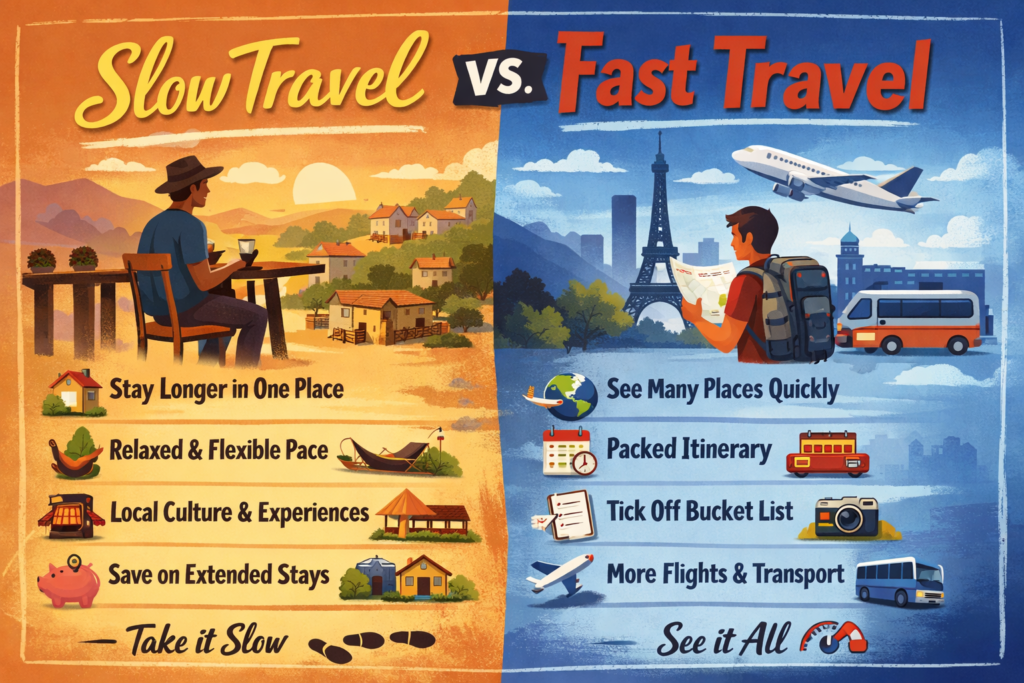
See More vs. Go Deeper:
Fast travel lets you cover a lot of ground quickly. For example, you could hit the top 10 sights of a city in just a few days. Slow travel, in contrast, gives you time to really get to know a place. You might wander into neighborhood cafes, chat with locals, and discover hidden gems that a whirlwind tour would miss. Even something like revisiting a landmark or museum several times can reveal details you’d never notice on the first rapid visit.
Cost Trade-offs:
Both styles can save money in different ways. Fast travel cuts accommodation and food costs by shortening your trip (you pay for fewer hotel nights and meals). But every flight or train ride adds up. Slow travel often brings its own discounts: weekly or monthly rentals, cooking your own meals, and local transport passes. For example, that same week in London might have a cheaper nightly rate if you stay longer, even though the initial cost of a multi-week reservation can be higher.
Pace and Stress:
Fast travel is exciting but can be exhausting. Moving through 10 cities in 10 days (with early mornings and late nights) quickly burns people out. Slow travel tends to be much more relaxed and flexible. It’s about lazy mornings, spontaneous plans, and really savoring each moment. Travelers often find slow trips feel restorative, you’re not rushing to the next train, so you notice the small joys (like an extra hour at the seaside or a conversation with a local).
Adaptability and Goals:
Ultimately, do what makes you happy. Fast travel suits you if you’re short on vacation days or love ticking destinations off a list, and if you thrive on activity and variety. Slow travel is ideal if you have more time and crave immersion or relaxation – think digital nomads, retiree vacations, or family trips where downtime matters. You can even mix approaches: for instance, blaze through one region quickly but stay several days in another that really interests you. The key is to match your pace to your comfort.
Bottom Line:
Neither fast nor slow travel is objectively better, they just feel different. If you choose to travel quickly, plan well and be ready for long days. If you choose to travel slowly, embrace spontaneity and relationships. Many travelers find that understanding these trade-offs helps them plan trips that suit their style. By finding the right balance or blending both approaches you make every vacation day count for you.
Travel is ultimately about what you value: whether that’s having 24 hours packed with activities, or taking three days to climb the same mountain and watch the sunset. Understanding fast vs. slow travel helps you plan a trip that matches your desires, so you can enjoy every moment of your journey.